



More than 14,500 foreign brands from 63 countries are selling on Chinese eCommerce platforms, and more than half of these brands have their presence on Tmall International platform. Two major reasons for this emergence of foreign brands on Chinese eCommerce platforms are: growing demand of foreign products, and relaxed policies on consumers purchasing personal items from foreign website.
2016 Tmall Global Top-Selling Countries
Rank Country Best-selling categories Market share
1. Japan Beauty/diaper/skincare 19.3%
2. U.S. nutrition/formula milk/bag 18.3%
3. South Korea Beauty/Skincare/apparel 13.6%
4. German Food/Kitchenware/Nutrition 8%
5. Australia Nutrition/Food/Coffee 7.9%
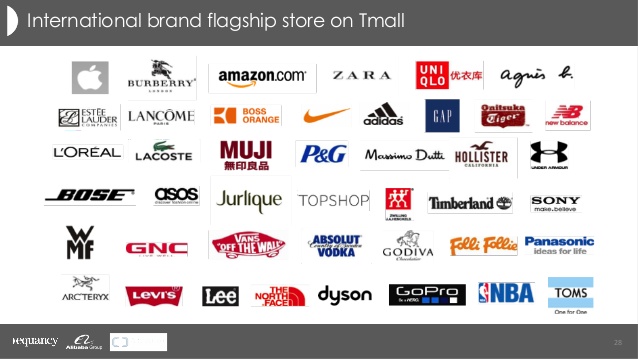
Best-Seller Categories on Chinese e-Commerce Platform
Chinese consumers prefer beauty products, baby diapers, apparel and skincare products from Japan and South Korea.
- Among product categories from the United States of America, Chinese consumers prefer nutritional supplements and baby milk formula.
- Germany and Australia are famous for kitchenware, nutritional food items, and coffee.
- Alcohols beers made in U.S ,wines from France and Italy.
- Fastest growing product category is: Children Supplies, Business Supplies, Cosmetics and Snacks.
Whereas foreign brands account for around 10% of China’s overall retail market, they make up 40% of goods sold online. If you look at categories such as wine, imports account for 85% of sales online. Even milk, where just 1% of domestic sales happen online, 30% of import sales are on eCommerce platforms. That is why China’s big eCommerce players such as Alibaba and JD are busy opening up offices across Europe, North American and Australasia.
There are 198 prefecture-level cities in China with population bigger than Manchester. Although most of these cities don’t have the discretionary income of cities like Shanghai or Beijing, they are China’s fastest growing cities, with consumers having an increasing appetite for new and foreign goods. Many of these foreign goods are difficult to get at the local mall, but eCommerce platforms opens up a whole new range of products.
How can foreign brands have presence on Chinese e-commerce platform?
Depends on the product categories it is prompting, foreign companies need to have online presence on one or more Chinese eCommerce platforms.
Tmall.com & JD.com
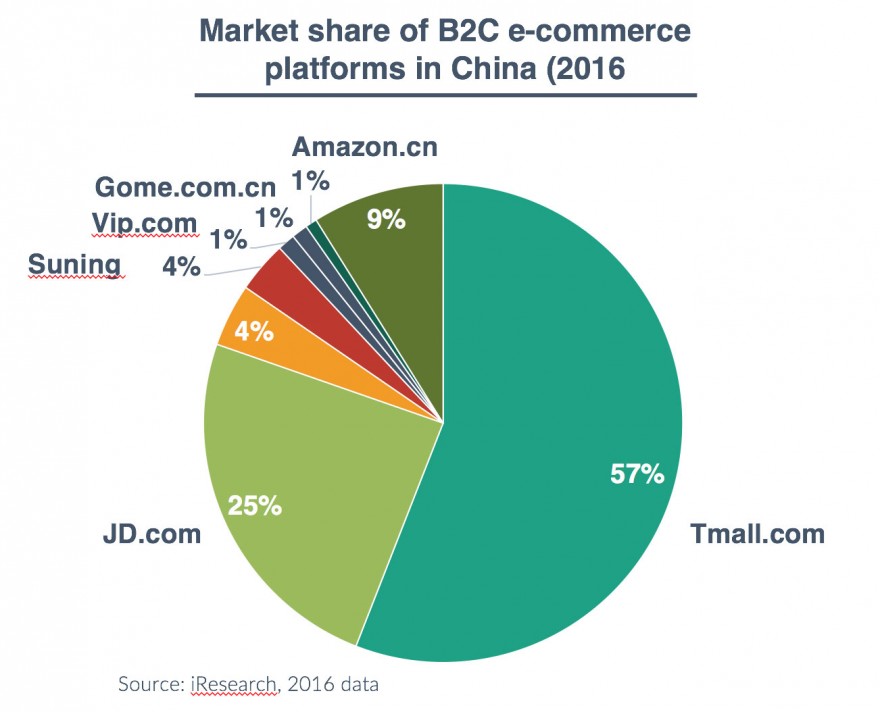
Tmall holds the biggest market share in eCommerce market in China at 57%. It is also the most expensive online marketplace in China, as Tmall mainly focuses on premium brands. Tmall allows International brands to open exclusive online stores and directly sell products to Chinese consumers without having bricks-and-mortar stores in China. Small has invitation-only policy where only qualified international brands can either be invited to join or can apply through a local digital marketing agency.
JD.com has relatively less market share than Tmall.com, it is also less expensive option. It has a zero tolerance policy for counterfeit products. Same as Tmall, JD.com allows international brands to have individual online stores without being physically presence in China.
Online Wechat store
WeChat is all-in-one-app which integrates social eCommerce seamlessly. Wechat store gives numerous possibilities to International brands to reach Chinese consumers effectively. WeChat Service Account is considered the most suitable for business and organisation that aspires to access to Chinese consumers. Service accounts allow companies to open their own online store. The online store can be used to manage products, take orders, display products, and manage customer complaints.
Related Posts

A New Retail Era Is Coming to China
In an survey conducted by JD.com, about 90% of participants are willing to increase their spending on high-end products by at least 5%, with nearly 60% of them willing to increase their spending by more...
Uma conta que sigo só joga Crypto Gold no domingo. Diz que paga melhor. A gente riu, os dados concordam.
Quanto tempo vocês dão pro Wizdom Wonders antes de rotacionar?
Se o Opera Dynasty comeu 30% da banca sem feature, acabou. Sai.
Loguei 500 giros no Fortune Mouse. Os dados são chatos. Os bônus não.
O veterano calado só joga Bikini Paradise no domingo. Diz que paga melhor. A gente riu, os dados concordam.
Bônus do Piggy Gold bateu mais ou menos a cada 200-300 giros na minha amostra. Pode variar.
Anyone tracking Caishen Wins bonus hit rate on a real spreadsheet, not vibes?
2026 é o ano que o jogador começou a se importar mais com licença que com logo do cassino.
Uma conta que sigo perdeu R$420 fazendo chasing no Santa’s Gift Rush, postou o comprovante, assumiu. Respeito.
Three Monkeys variance hit different since the patch.
Uma conta que sigo parou de jogar Hood vs Wolf depois do patch do Q1. Voltou semana passada. Outro jogo agora, ele diz.
Alguém tá mesmo tracking taxa de bônus do Treasures of Aztec numa planilha real, sem ser feeling?
Mais alguém sente que o Opera Dynasty apertou depois do update?
A variância do Wild Bandito bateu diferente em 2026.
Why does Caishen Wins bonus always trigger when I’m about to quit? Lol.
Rough math on Wild Wild Riches: 96% RTP holds across long enough samples. Short ones lie.
Nobody talks about Buffalo Win but the hit-rate is honestly fine.
Fortune Mouse morto hoje.
A teacher in salvador called Candy Bonanza “the only honest one” — half joking, half not.
The reddit thread weekend recap is the only thing I read on Mondays.
Fortune Gods de novo? Os regulares não para de postar.
O discord resumão do fim de semana é a única coisa que leio na segunda.
Lucky Neko vale o replay — já vi pattern de entrada.
An account i follow only plays Crypto Gold on Sundays. Says it pays better. We laughed, the data agrees.
A teacher in salvador stopped playing Crypto Gold after the Q1 patch. Came back last week. Different game now, he says.
A streamer com 80 viewers jura por USDT TRC-20 pra saque rápido nas sessões de Bikini Paradise.
Mahjong Ways morto hoje.
Tamanho da aposta a 1% da banca no Jewel Race Ganesha. Acima disso é jogatina, não jogo.
“Jewel Race Ganesha bonus buy” Google trends spiked after the influencer push. Now flatlining.
Fortune Mouse again? most groups won’t stop posting about it.
Caishen Wins não me deve nada.
Brasileiro googla “melhor cassino BR” antes de depositar agora.
Avoided Diamond Cascade after the patch, came back this week, same vibe as before.
Fortune Rabbit acordou.
O estudante de direito parou de jogar Secrets of Cleopatra depois do patch do Q1. Voltou semana passada. Outro jogo agora, ele diz.
Variância é real. Vibe não.
Vale a pena comprar bônus no Jewel Race Ganesha ou espera natural compensa mais?
“Compra de bônus Fortune Rabbit” trends bombou depois do influencer empurrar. Agora estabilizou.
check out this one from Wp
Cross-border on Chinese eCommerce Platforms – 2Open
Define o alvo antes de abrir Fortune Mouse. Bateu, sai. Não tem negociação.
Semana quente no Emperor’s Favour.
Conta nova não para de postar.
Por que ninguém fala do Wizdom Wonders? É bom demais ou ruim demais?
Os clipes de max win do Fortune Gods enganam — sessão média é bem mais calma.
O cara que parou de chasing em março parou de jogar Buffalo Win depois do patch do Q1. Voltou semana passada. Outro jogo agora, ele diz.
A enfermeira do plantão noturno parou de jogar Dragon Hatch 2 depois do patch do Q1. Voltou semana passada. Outro jogo agora, ele diz.
Por que ninguém fala do Ganesha Gold? É bom demais ou ruim demais?
Love how you explained this — very down-to-earth and easy to follow.
This was such an enjoyable read — thanks!
Galera da planilha ganhando o longo prazo.